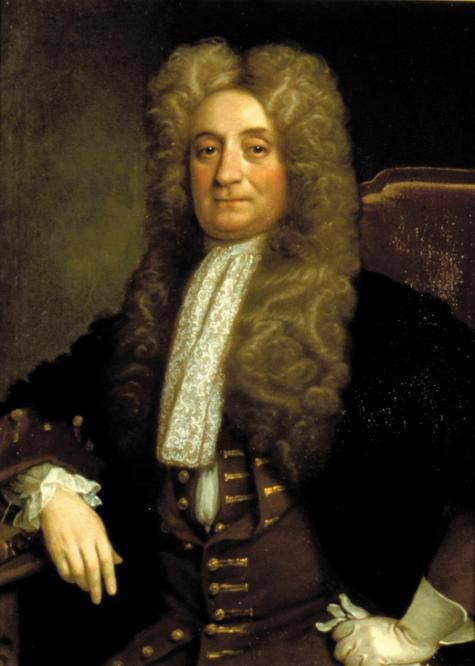
Sir Hans Sloane was born in 1660 in the North of Ireland, in relatively modest circumstances. As a child, he had an interest in natural history and went on to study medicine and botany in London, Paris and Montpellier.
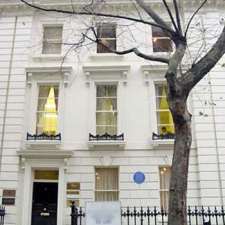
In 1689, Sloane set up a successful medical practice at his home in No. 3 Bloomsbury Place in London – coincidentally just along the street from the present Museum building. He had a number of wealthy and aristocratic patients, among them Queen Anne and Kings George I and II.
Sloane built up his vast collections through two principal means. He absorbed complete collections made by others, often friends such as William Charlton and James Petiver. And he bought numerous natural and artificial curiosities from travellers and colonial settlers around the expanding British Empire, ranging from North America and the West Indies to South and East Asia.
As a result, Sloane’s collections outgrew the house at No. 3 Bloomsbury Place and he purchased No. 4 as well. They were visited by many people during his lifetime, mainly scholars and dignitaries, among them was the composer Handel who is said to have outraged his host by placing a buttered muffin on one of his manuscripts.
Sloane died at the age of 92 in 1753 and was buried at Chelsea Old Church. Among his many natural specimens and artificial curiosities, his collection included:
- 32,000 coins and medals
- 50,000 books, prints and manuscripts (now in the British Library)
- a herbarium of 334 volumes of dried plants from around the world (now in the Natural History Museum)
- 1,125 ‘things relating to the customs of ancient times‘
In his will, Sloane bequeathed his entire collection to King George II for the nation in return for the payment of £20,000 to his heirs, and on condition that Parliament create a new and freely accessible public museum to house it.

Parliament accepted Sloane’s terms, raising the money through a national lottery and on 7 June 1753, an Act of Parliament establishing the British Museum received the royal assent. Sloane’s collections, together with several additional libraries and collections, thus became the foundation of the British Museum.
 Cultureseekers Blog
Leave a comment